What is Advent is a question many Christians have never really stopped to ask, even though the season quietly appears every year on the church calendar. We light candles, put up trees, plan gifts, and rehearse Christmas dramas, yet for a lot of believers, Advent is just a word printed on a bulletin, not a rhythm that shapes the heart.
If you’ve ever reached Christmas Day feeling tired, over-stimulated, and strangely empty inside, it may be because you’ve jumped straight to celebration without first passing through the doorway of Advent. When we ask honestly, what is Advent, we discover it is God’s gift to a rushed church: a season of waiting, longing, and preparation that slows us down and re-centers us on Christ.
In this post, we will look closely at what is advent through Scripture, church history, and the pressures of modern life. The goal is simple: to help you see this “forgotten season” with fresh eyes so that your Christmas joy rests on a deeper foundation.
What Is Advent and Why the Question Still Matters
At its simplest, what is advent can be answered with a single word: coming. The term “Advent” comes from the Latin adventus, which means “arrival.” But whose arrival? Christ’s.
The earliest Christians developed Advent as a season leading up to Christmas, a time to prepare for the celebration of Jesus’ birth and to remember that He will come again. Advent was not just about marking time; it was about forming hearts.
Today, though, many believers are shaped less by the question what is advent and more by advertising schedules, shopping seasons, and travel plans. December becomes a blur of:
-
Online sales and holiday spending
-
End-of-year deadlines
-
Social events and endless notifications
None of these are evil in themselves. But if they fill all the space, Advent disappears. We invest heavily in gifts, flights, and experiences, but far less in things like Christian books that unpack the meaning of the season, online Bible study resources focused on Christ’s coming, or Christian devotionals that invite us to slow down and listen.
So asking what is advent is not about nostalgia. It is about survival. It is about whether our souls have any quiet, any Scripture, any expectancy left in December or only noise.
The Silent Battles Christians Fight: Finding Strength When No One Sees Your Struggle
What Is Advent in the Story of Scripture?
To really answer what is advent, we have to step back into the big story of the Bible. Advent gathers three movements of that story into one season:
-
Christ came in history.
-
Christ comes now by His Spirit.
-
Christ will come again in glory.
Each movement is anchored in Scripture.
Advent in the Old Testament: Waiting in the Dark
The Old Testament is full of people who did not just ask what is advent; they lived it. They waited.
Isaiah speaks of a people “who walked in darkness” yet “have seen a great light” (Isaiah 9:2). He prophesies a Child who will be called “Wonderful Counselor, Mighty God, Everlasting Father, Prince of Peace” (Isaiah 9:6). Micah 5:2 points to a ruler who will come from Bethlehem.
For centuries, Israel carried promises without seeing the full picture. When we ask what is advent, part of the answer is this: it is standing in that same space of expectancy, trusting that God keeps His word even when it takes longer than we want.
Advent in the Gospels: God With Us
In the Gospels, what is advent becomes flesh.
-
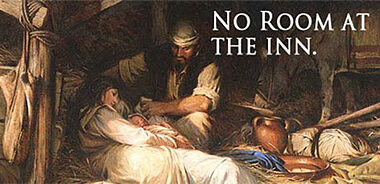
Luke 1–2 tells of Mary, Joseph, angels, shepherds, and an ordinary manger holding the extraordinary Son of God.
-
Matthew 1–2 shows Joseph wrestling with fear and obedience.
-
John 1:14 declares, “The Word became flesh and dwelt among us.”
Mary answers what is advent with a surrendered “Let it be to me according to your word” (Luke 1:38). Joseph answers what is advent with quiet obedience in the face of misunderstanding (Matthew 1:24). The shepherds answer what is advent when they leave their fields at night to go and see what God has done (Luke 2:15–16).
Advent is not about vague spirituality. It is about God stepping into real history, into poverty, into a world that needed rescuing.
Advent and the Second Coming: Still Waiting
The New Testament also looks forward. Titus 2:11–13 says the grace of God has appeared, teaching us to live godly lives “waiting for our blessed hope, the appearing of the glory of our great God and Savior Jesus Christ.” Hebrews 9:28 promises that Christ will “appear a second time… to save those who are eagerly waiting for him.” Revelation ends with, “Come, Lord Jesus!” (Revelation 22:20).
So what is advent? It is the church standing between two comings: remembering Bethlehem while watching the sky. Advent pulls our eyes off the calendar and onto eternity, reminding us that history is heading somewhere and Someone.
What Is Advent Compared to Christmas?
Many of us grew up treating December as “the Christmas season,” with Advent as a minor detail, if we noticed it at all. But once you understand what is advent, the relationship between Advent and Christmas comes into focus.
-
Advent is the season of waiting, longing, and preparing.
-
Christmas is the feast of celebration and fulfillment.
When we skip Advent, we often race toward Christmas without really feeling our need for Christ. Our celebrations become thin. We may still sing “O Come, O Come, Emmanuel,” but our hearts have not actually lived in that longing.
Families pour energy into travel plans, gift lists, and holiday budgets, while the deeper spiritual questions what is advent, how do we prepare our hearts, what is the Spirit saying in this season remain untouched. Even good things like Christian parenting resources and family devotionals can slide to the edges if we are not intentional.
When Advent is restored, Christmas gains depth. Joy doesn’t feel forced. It feels like the right ending to a month of honest waiting and reflection.
What Is Advent Saying to an Impatient Generation?
We live in a world that does not like to wait for anything. We refresh tracking links. We feel annoyed when a website takes more than a few seconds to load. Our phones are full of apps designed to save us time, increase our productivity, and remove friction from our lives.
Into that world, the simple question what is advent carries a quiet challenge.
Advent teaches us that:
-
Waiting can be holy.
-
God often works beneath the surface.
-
Delays in our story are not proof that God has abandoned us.
Psalm 27:14 calls us to “Wait for the Lord; be strong, and let your heart take courage; wait for the Lord!” Isaiah 40:31 promises that those who wait on the Lord will “renew their strength.”
Many believers today walk into December exhausted emotionally, financially, spiritually. Some seek Christian counseling or faith-based therapy to process anxiety, grief, or burnout. Those are wise and often necessary steps. Alongside them, Advent whispers another invitation: slow down, sit with Scripture, ask God where He is at work while you wait.
Each time you choose quiet prayer over mindless scrolling, you practice what is advent. Each time you turn to an online Bible study instead of another hour of empty browsing, you are letting Advent push back against your impatience.
What Is Advent in Your Home This Year?
The meaning of Advent only truly shapes us when it moves from theory to practice. You do not need a cathedral to keep Advent; you just need a willing heart and some simple habits.
Here are a few practical ways your home can live out Advent:
1. Create a Simple Advent Rhythm
Use an Advent wreath or any four candles. Each week, light one and read passages like Isaiah 9, Luke 1–2, or John 1. Ask one question out loud: “If this is what advent is about, what is God saying to us right now?”
You can build this around existing tools family devotionals, a good Christian book, or an online Bible study plan that focuses on Christ’s coming.
2. Make Space for Short, Honest Devotions
Advent doesn’t require hour-long sessions. Ten focused minutes can be powerful. Use a devotional app, a printed guide, or simple journaling questions:
-
Where am I longing for God to move?
-
What promises am I holding onto?
-
What is advent exposing about my fears or my pace?
This kind of reflection helps answer what is advent in the language of your own story, not just in abstract theology.
3. Practice Generosity and Compassion
Advent points us to a Savior who left heaven’s riches to enter human poverty. Let that shape how you handle money and time this season.
Consider:
-
Supporting a mission organization or local church initiative.
-
Giving anonymously to someone in need.
-
Using part of your holiday budget to bless someone who cannot repay you.
When generosity flows from the meaning ofadvent, it stops being seasonal charity and becomes a response to the generosity of God.
4. Guard Your Calendar and Your Attention
Use the same time management tools and productivity apps that keep your work life organized to protect spiritual space in December. Decide in advance which invitations you will accept and which you will decline. Set aside non-negotiable time for worship, rest, and Scripture.
You are not weak if you need boundaries; you are wise. Advent asks not only what is advent in theory, but also: what kind of December will help my soul hear God?
So, What Is Advent to You Personally?
We have circled this question from many angles: biblical, historical, practical. But it only truly matters if Advent moves from a concept you understand to a reality you live.
Here is the heart of it:
-
What is advent? It is the church remembering that Christ has come, Christ is coming to us even now, and Christ will come again.
-
What is advent? It is learning to wait with hope rather than anxiety, to slow down in a world that only knows how to rush.
-
What is advent? It is God’s gentle way of saying, “Make room. Prepare Him room, not just in your schedule, but in your heart.”
So let me ask you: What is advent to you this year?
Is it just a word on a church poster, or is it an invitation from God to repent, to refocus, and to rediscover the wonder of Christ’s coming? Will you rush through December as usual, or will you carve out space for Scripture, prayer, and honest reflection?
If you are willing, let Advent become more than a phrase. Let it become your posture, your way of standing before God in this season. Wait with Him. Walk with Him. And as you do, you may find that when Christmas finally comes, your heart is not just busy, but is ready.