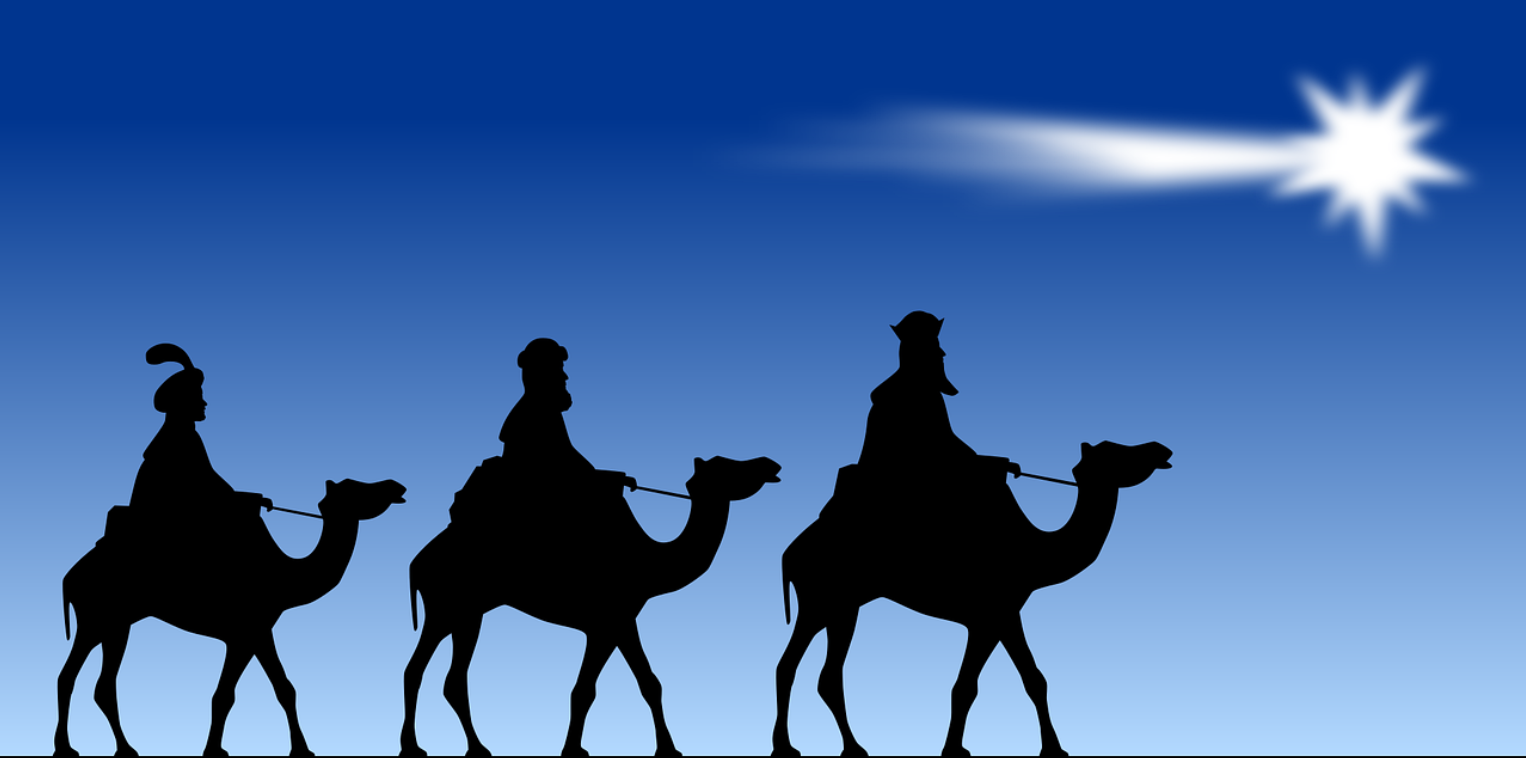
Three wise men in the Bible is one of those phrases that feels unquestionable. It’s familiar, comforting, and stitched deeply into how many of us first learned the Christmas story. We sing it. We display it. We teach it to children without a second thought.
And yet, when you slow down and actually read Matthew’s Gospel, something interesting happens: the text is far more restrained than our traditions. Matthew tells a careful story, but over time we’ve filled in the margins with confidence, sometimes without realizing we’ve moved beyond what Scripture actually says.
This isn’t about tearing down Christmas traditions or embarrassing anyone who grew up with a nativity set. It’s about learning how to read the Bible with honesty, humility, and trust in the text itself. When we do that, the story doesn’t become smaller, it becomes richer, sharper, and more globally significant than many of us realized.
Why the three wise men in the Bible Question Still Matters Today
At first glance, questioning the three wise men in the Bible idea can feel petty. After all, does it really matter whether there were three or five or twelve?
It does because how we handle small biblical details often reveals how we handle big ones.
When we speak confidently where Scripture is silent, we unintentionally train people to trust tradition as much as the text. Over time, that blurs the line between what the Bible teaches and what Christian culture has supplied. For new believers, skeptics, or serious students of Scripture, that blur can quietly undermine trust in the Bible itself.
But there’s another side to this: correcting tradition doesn’t require mockery. Mature faith knows how to hold warmth and truth together. We can appreciate tradition while still saying, “Let’s see what Matthew actually wrote.”
That posture calm, curious, and text-centered is at the heart of faithful Bible study.
Should Christians Celebrate Christmas at All? A Biblical Case For and Against
What Matthew Actually Says: Letting the Text Speak (Matthew 2:1–12)
Matthew’s account of Jesus’ early life is brief but deliberate. Every word is doing work.
He writes:
“Now after Jesus was born in Bethlehem of Judea in the days of Herod the king, behold, wise men from the east came to Jerusalem” (Matthew 2:1).
From there, the narrative unfolds carefully:
-
The visitors come from the east.
-
They are seeking “the king of the Jews” (Matthew 2:2).
-
They are guided by a star.
-
They consult Jerusalem’s religious leaders.
-
They arrive at a house, not a stable.
-
They worship the child.
-
They present gifts.
-
They obey a divine warning and return home another way.
What stands out is not how much Matthew tells us, but how intentionally he limits what he says.
What Matthew clearly tells us
-
The visitors are called magi, not kings (Matthew 2:1).
-
Their purpose is worship, not diplomacy (Matthew 2:2, 11).
-
They bring gold, frankincense, and myrrh (Matthew 2:11).
-
God actively guides and warns them (Matthew 2:9–12).
What Matthew never says
-
He never states their number.
-
He never calls them kings.
-
He never names them.
-
He never places them at the manger.
-
He never describes their appearance or ethnicity.
This is where the familiar phrase three wise men in the Bible begins to wobble not because it’s malicious, but because it’s more confident than the text allows.
Where “Three” and “Kings” Came From
So how did we get here?
The number “three”
The simplest answer is also the most honest: three gifts (Matthew 2:11). Over time, people naturally assumed one gift per visitor. It’s a reasonable assumption but it’s still an assumption.
Matthew leaves the number open.
The idea of “kings”
This likely comes from reading Matthew alongside passages like:
-
Psalm 72:10–11, where kings bring gifts to God’s anointed.
-
Isaiah 60:3–6, where nations bring gold and frankincense to the Lord’s light.
These passages are deeply messianic and beautifully connected to Christmas themes. But Matthew does not quote them here. He explicitly references Micah 5:2 through the scribes (Matthew 2:5–6). Calling the magi “kings” reflects theological reflection, not Matthew’s wording.
Names and backstories
The familiar names appear centuries later in Christian tradition, art, and teaching. They’re meaningful in a cultural sense but they are not Scripture.
So when people say three wise men in the Bible, the most accurate response is gentle clarity: Matthew records magi and gifts; tradition supplied the rest.
Three wise men in the Bible Or Magi? Why the Word Choice Matters
Matthew uses the term magi (Matthew 2:1). He doesn’t explain it, likely because his audience didn’t need a detailed definition.
What matters is how Matthew portrays them:
-
They are seekers.
-
They recognize divine significance where others miss it.
-
They respond with worship, joy, and obedience.
Ironically, Jerusalem’s religious experts know the Scriptures well enough to cite prophecy but they don’t move an inch toward Bethlehem. The magi, with far less biblical background, travel far and fall down in worship.
Matthew isn’t interested in their résumés. He’s showing us how God draws unexpected people to Christ and how proximity to Scripture doesn’t always equal submission to it.
Timing, Location, and the “House” Detail (Matthew 2:11)
Another quiet correction to the three wise men in the Bible tradition is Matthew’s language about location.
He writes that the magi entered “the house” and saw “the child” (Matthew 2:11). Luke, by contrast, emphasizes the manger and the shepherds (Luke 2:7–16).
Matthew also tells us Herod investigated the timing of the star (Matthew 2:7) and later ordered the killing of boys two years old and under (Matthew 2:16). That doesn’t fix an exact arrival date but it strongly suggests the magi’s visit wasn’t the same night Jesus was born.
Matthew’s concern isn’t calendar precision. It’s theological contrast: worship versus fear, obedience versus manipulation.
The Star: Enough to Trust, Not Enough to Obsess Over
The star has generated endless theories. Matthew, again, is restrained.
He tells us:
-
The magi saw a star connected to the King’s birth (Matthew 2:2).
-
The star reappeared and guided them (Matthew 2:9).
-
Their response was overwhelming joy (Matthew 2:10).
Matthew doesn’t invite us into speculation for its own sake. He invites us to see a God who actively leads seekers to Christ. When star theories eclipse worship, we’ve drifted from the point.
Gifts That Fit the Story (Matthew 2:11)
The gifts matter not because they prove there were three wise men in the Bible, but because they fit Matthew’s theological portrait.
-
Gold fits a king (Matthew 2:2).
-
Frankincense fits worship (Matthew 2:11).
-
Myrrh, later associated with burial (John 19:39), quietly foreshadows suffering.
Matthew doesn’t spell this symbolism out, but he doesn’t need to. His Gospel will soon make clear that this King’s path leads through suffering before glory.
Why Matthew Tells This Story at All
This is where everything comes together.
From the opening chapters, Matthew is telling us:
-
Jesus is King.
-
Gentiles are already coming to Him.
-
Scripture is being fulfilled.
-
Political power resists Him.
-
True worship requires movement, risk, and obedience.
The magi anticipate the end of the Gospel, where Jesus commands His followers to make disciples of all nations (Matthew 28:19). The story begins and ends globally.
Seen this way, the three wise men in the Bible discussion isn’t trivia, it’s discipleship.
Teaching This With Grace, Not Contempt
If you’ve ever gently corrected someone on this topic, you know how easily it can sound pedantic. Wisdom matters here.
Affirm what tradition gets right.
Clarify what Scripture actually says.
Move quickly to the heart of the Gospel.
Truth doesn’t need sharp edges to be strong.
Conclusion: Let Scripture Lead the Story
The phrase three wise men in the Bible is familiar but Matthew gives us something better than familiarity. He gives us a carefully shaped story of seekers who traveled far, worshiped deeply, and obeyed God faithfully.
They weren’t named.
They weren’t numbered.
They weren’t crowned kings by Matthew.
But they were drawn to Jesus and that’s the point.
When we let Scripture lead, the story becomes clearer, stronger, and far more challenging than tradition alone ever made it.