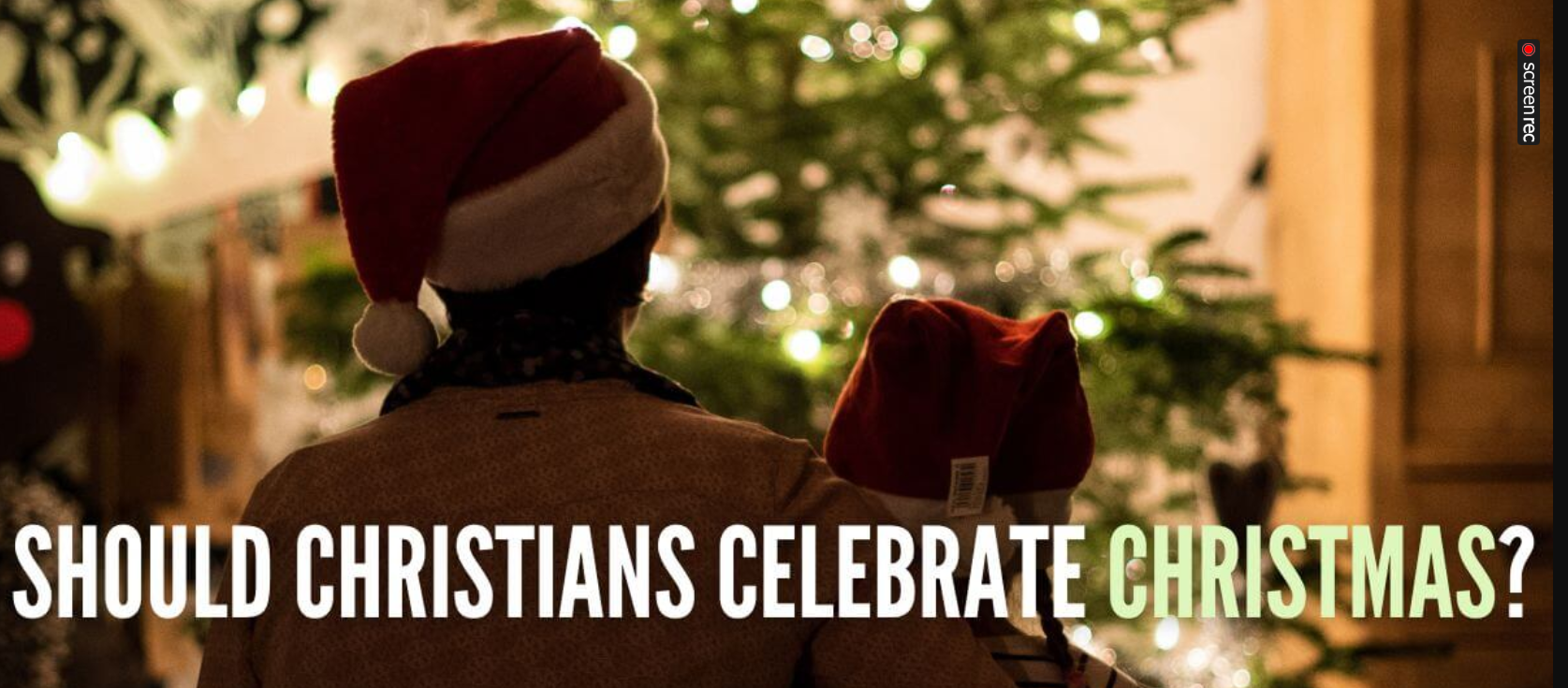
Should Christians celebrate Christmas is not a question born out of cynicism or rebellion. More often, it comes from sincere believers who love Scripture and want to honor God without blindly inheriting tradition. It’s the kind of question that tends to surface late at night, after a Bible study, during a family conversation, or when someone notices the tension between the beauty of the season and the noise surrounding it.
For some Christians, Christmas is a cherished time of worship, an annual reminder that God entered human history in the person of Jesus Christ. For others, it feels uncomfortably crowded with commercialism, mixed messages, and practices that don’t clearly trace back to biblical instruction.
And for many, the honest answer falls somewhere in the middle: I love what Christmas points to, but I’m uneasy about what it has become.
That tension is worth taking seriously.
This article explores should Christians celebrate Christmas with patience and depth laying out the strongest biblical case for celebrating, the strongest biblical case against it, and a clear framework for making a Christ-honoring decision without fear, pride, or division.
Should Christians Celebrate Christmas? Why This Question Deserves Careful Thought
The reason should Christians celebrate Christmas continues to stir debate is because it touches something deeper than preference. It touches worship.
Scripture calls believers to offer their whole lives to God not just their words, but their habits, priorities, spending, and celebrations (Romans 12:1; 1 Corinthians 10:31). When a practice becomes widespread and emotionally charged, wisdom demands examination.
This question matters because it intersects with:
-
Worship — what belongs exclusively to God
-
Discipleship — what our habits quietly teach our children
-
Holiness — how we remain distinct without becoming isolated
-
Unity — how believers handle disagreement
Handled poorly, the conversation can slip into legalism, where tradition becomes law, or carelessness, where discernment is dismissed as unnecessary. Scripture cautions against both extremes.
Christian View of Santa Claus: Why This Debate Refuses to Go Away
What the Bible Clearly Says and What It Doesn’t
Any honest answer to should Christians celebrate Christmas must begin with Scripture itself, not assumptions.
1. The Bible records Jesus’ birth but does not command an annual celebration
The Gospels of Matthew and Luke carefully record the events surrounding Christ’s birth (Matthew 1–2; Luke 1–2). Angels rejoice. Shepherds worship. Heaven interrupts earth.
Yet the New Testament never instructs believers to commemorate the birth of Christ on a set day each year.
That silence is important not as a prohibition, but as a boundary. Christmas is not presented as a biblical ordinance in the way communion is.
2. God did appoint feasts but within a specific covenant
Israel was commanded to observe festivals under the Mosaic Law (Leviticus 23). These feasts pointed forward to Christ (Colossians 2:16–17), but Christians are no longer under that covenantal framework (Galatians 3:24–25).
3. The Lord’s Supper is the one explicitly commanded remembrance
Jesus said clearly:
“This do in remembrance of me.” (Luke 22:19)
That distinction shapes the conversation. Christmas may be meaningful but it is not mandatory.
So should Christians celebrate Christmas is not a salvation question. It’s a wisdom question.
The Biblical Case For Celebrating Christmas
Many faithful Christians answer “yes” to should Christians celebrate Christmas, and their reasons deserve to be heard fairly.
1. The incarnation sits at the heart of the gospel
Christian faith rests on a stunning claim:
“The Word was made flesh, and dwelt among us.” (John 1:14)
Paul echoes this truth:
“When the fulness of the time was come, God sent forth his Son.” (Galatians 4:4)
Celebrating the incarnation can be an act of worship if the focus remains on Christ, not the calendar.
2. Christmas offers a rare cultural opening for gospel witness
Luke records the angel’s declaration:
“Unto you is born this day… a Saviour.” (Luke 2:11)
In many societies, Christmas still softens hearts and opens conversations. For some believers, celebrating Christmas is a missional choice that is a way to speak about Christ in a season when people are already listening.
3. Scripture allows dedicating days to the Lord
Romans 14 speaks directly to disputed practices:
“One man esteemeth one day above another… Let every man be fully persuaded in his own mind.” (Romans 14:5)
Paul does not command or condemn. He emphasizes conscience, faith, and intention.
From this perspective, should Christians celebrate Christmas can be answered yes if the day is truly regarded “unto the Lord.”
4. Christmas can encourage generosity and gratitude
When practiced intentionally, Christmas can move believers toward giving rather than getting.
-
“God loveth a cheerful giver.” (2 Corinthians 9:7)
-
“He that hath pity upon the poor lendeth unto the LORD.” (Proverbs 19:17)
For many families and churches, Christmas becomes a season of hospitality, charity, and shared worship.
Was Jesus Really Born on December 25? What History and the Early Church Actually Tell Us
The Biblical Case Against Celebrating Christmas
Other believers answer “no” to should Christians celebrate Christmas, and their concerns are not without biblical grounding.
1. Scripture does not command it
Some Christians are cautious about religious practices not clearly rooted in Scripture.
Jesus warned:
“In vain they do worship me, teaching for doctrines the commandments of men.” (Mark 7:7)
For these believers, abstaining is not rejection of Christ, it’s an effort to guard biblical authority.
2. Concerns about syncretism and mixed worship
Scripture consistently warns against blending worship with surrounding cultural practices:
-
“Thou shalt have no other gods before me.” (Exodus 20:3)
-
“Learn not the way of the heathen.” (Jeremiah 10:2)
Some Christians feel Christmas carries too many borrowed symbols and pressures that blur devotion to Christ. Abstaining becomes a way to protect spiritual clarity.
3. The pull of materialism and distraction
Even those who love Christmas often admit how easily it becomes consumer-driven.
Jesus warned plainly:
“Beware of covetousness.” (Luke 12:15)
Some believers choose not to celebrate because they have seen the season reshape priorities in ways that weaken discipleship.
4. The conscience principle
Paul writes:
“Whatsoever is not of faith is sin.” (Romans 14:23)
If celebrating Christmas violates a believer’s conscience, abstaining can be the most faithful choice.
Should Christians Celebrate Christmas and Avoid Paganism?
Much of the should Christians celebrate Christmas debate revolves around claims of pagan origins. Scripture offers a helpful lens.
Paul’s teaching on food offered to idols (1 Corinthians 8–10) shows that:
-
the idol itself is nothing,
-
but conscience and witness matter deeply.
The Bible does not teach guilt by historical association alone. It teaches responsibility for present meaning and present worship.
So the key question becomes:
What does this practice mean now and what does it do in the heart?
For some, Christmas can be practiced with clear Christ-centered worship. For others, abstaining protects holiness. Both can honor God.
A Scriptural Framework for Deciding
If you’re still asking should Christians celebrate Christmas, Scripture gives tools for discernment.
1. The Worship Test
Does this practice draw my heart closer to Christ or distract it?
“Thou shalt worship the Lord thy God.” (Matthew 4:10)
2. The Fruit Test
What does this produce in my life and home?
“By their fruits ye shall know them.” (Matthew 7:16)
3. The Conscience Test
Can I do this in faith and peace?
“Let every man be fully persuaded in his own mind.” (Romans 14:5)
4. The Witness Test
Does this help or hinder others?
“Give none offence.” (1 Corinthians 10:32)
This framework allows believers to decide should Christians celebrate Christmas without fear or pressure.
Practical Guidance for Families and Churches
Whether you celebrate or abstain, faithfulness matters more than uniformity.
If you celebrate
-
Read Luke 2 or John 1 together
-
Pray intentionally
-
Give generously
-
Keep spending thoughtful
-
Talk openly about Jesus, not just tradition
If you abstain
-
Explain your decision gently
-
Avoid condemning others
-
Emphasize that every day belongs to Christ
-
Keep joy central, not suspicion
Romans 14 reminds us:
“Let us therefore follow after the things which make for peace.” (Romans 14:19)
Disagreeing Without Dividing
Scripture is unambiguous here:
“Who art thou that judgest another man’s servant?” (Romans 14:4)
Believers must resist the urge to turn conviction into accusation. The mark of maturity is not agreement—but love.
Conclusion: Should Christians Celebrate Christmas?
So, should Christians celebrate Christmas? Scripture allows space for a faithful “yes” and a faithful “no.”
Those who celebrate should do so with clear devotion to Christ, guarding against materialism and empty tradition. Those who abstain should do so with humility, joy, and charity toward others.
The calendar is not the center of Christian faith. Christ is.
And whatever choice is made, may it be marked by a clear conscience, deep worship, and love for the body of Christ.