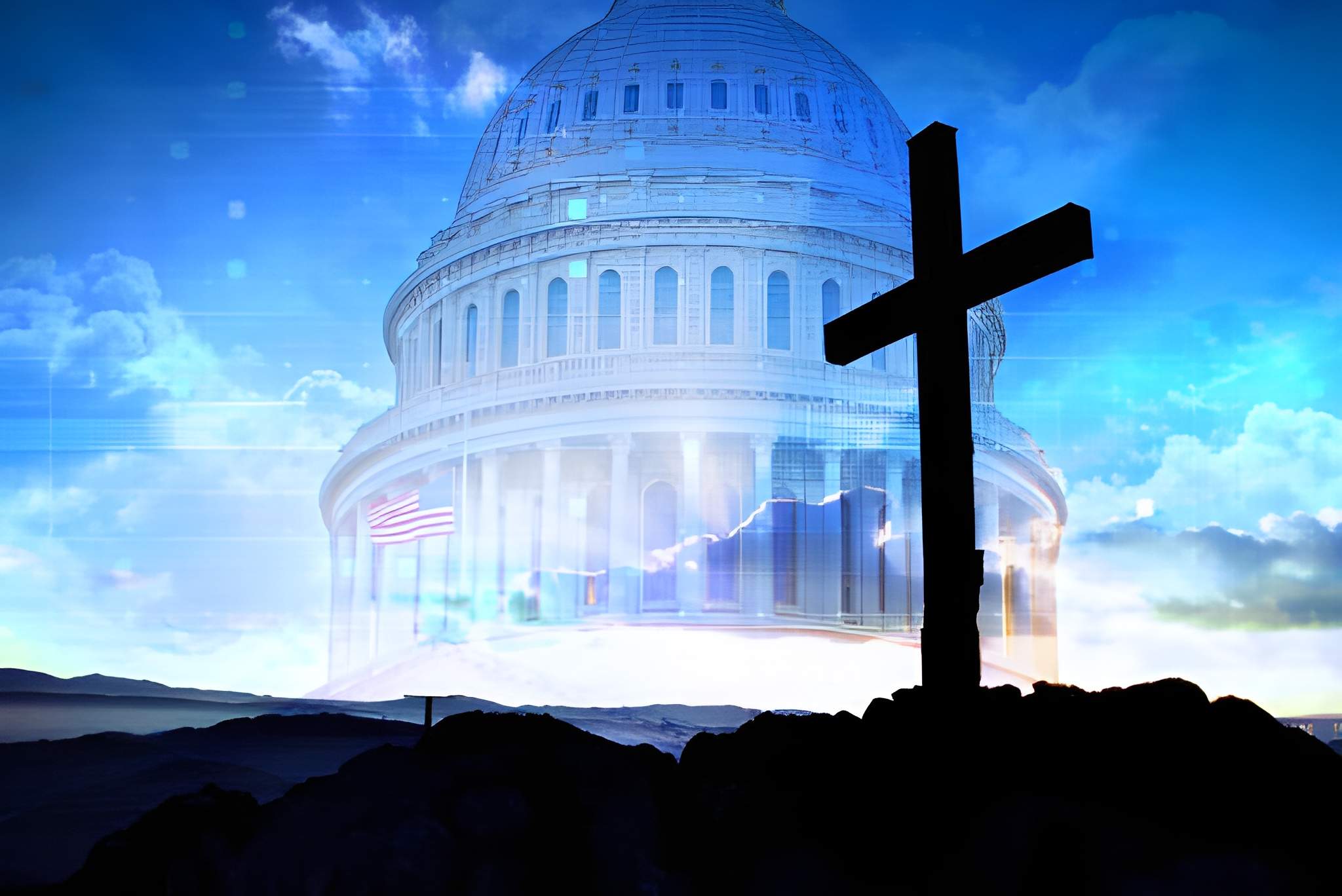
Church and politics sit in the same sentence, and you can almost feel people stiffen. Some say pastors should never mention elections, laws, or public policy from the pulpit. Others believe staying silent is itself a political choice. So what do we actually do with church and politics as followers of Jesus?
If we pretend the topic doesn’t exist, we still take a position by default. Every sermon we preach, every issue we ignore, every comment we make about public life reveals how we think about church and politics. The real question is not whether Christians engage, but how we do it under the lordship of Christ.
In this article, I want to walk with you through Scripture, not social media. We will look at what the Bible actually shows us about church and politics, why some believers want a strict separation, why others feel compelled to speak truth to power, and how ordinary Christians can navigate public life without losing the gospel in the noise.
Why Church and Politics Will Never Fully Separate
Let’s be honest: church and politics will always keep bumping into each other because both care about people, power, and how society is ordered.
Governments make decisions about justice, education, economic policy, war and peace, religious freedom, human rights, and public health. The church teaches about sin and righteousness, human dignity, mercy, truth, and God’s design for community. Those two spheres inevitably overlap.
So questions keep coming:
-
How should a Christian think about faith and public policy?
-
Can a pastor preach about justice without “getting political”?
-
What happens when laws collide with conscience or religious freedom?
That’s why believers reach for Bible study resources, Christian commentary, online theology courses, and Christian leadership training that speak directly to church and politics instead of just giving vague inspiration.
We cannot wish this tension away. But we can learn to handle it with wisdom.
Believing Again After Disappointment When Hope Feels Heavy
Biblical Foundations for Church and Politics and Authority
Before we draw lines in the sand, we have to start where God starts. What does Scripture actually say about church and politics and civil authority?
Romans 13:1–2 says:
“There is no authority except from God, and those that exist have been instituted by God.”
Rulers are called “God’s servants” (Romans 13:4), responsible for punishing evil and approving what is good. In 1 Timothy 2:1–2, Paul urges believers to pray for kings and all in high positions so that we may live peaceful, godly lives.
That means:
-
Government is not ultimate, but it is not irrelevant.
-
God can work through imperfect systems to restrain evil and preserve some measure of order.
-
The church is called to pray for leaders, not just complain about them.
So the conversation about church and politics doesn’t start with parties or constitutions. It starts with God’s sovereignty and our call to live faithfully under Him in any political environment.
Old Testament: God’s People in Places of Power
The Old Testament gives us striking examples of faithful engagement with power:
-
Joseph serves in Pharaoh’s court and manages a national crisis, using God-given wisdom to save many lives (Genesis 41).
-
Moses confronts Pharaoh as God’s prophet, demanding justice and freedom for Israel (Exodus 5–12).
-
Daniel and his friends serve in pagan governments, yet refuse to compromise their allegiance to the Lord (Daniel 1–6).
-
Esther uses her influence in the Persian palace to expose a genocide plan and protect her people (Esther 4–8).
None of these figures fit a simple formula. But they show that when we talk about church and politics, the Bible is not describing a people hiding from power. It often shows God placing His servants inside systems to restrain evil and protect the vulnerable.
New Testament: Kingdom People Under Empire
The New Testament paints a different scene: the Roman Empire.
-
Jesus stands before Pilate and says, “My kingdom is not of this world” (John 18:36). He refuses to grasp earthly power, yet His presence exposes the injustice and cowardice of the trial itself.
-
John the Baptist publicly calls out Herod’s sexual sin and abuse of authority (Mark 6:17–18) and pays for it with his life.
-
Paul uses his Roman citizenship, legal rights, and formal appeals to advance the gospel and protect himself from unlawful treatment (Acts 22–25).
Again, church and politics are not collapsed into each other. The church doesn’t become a party machine. But faith is not sealed off from public life either.
The Case for Keeping Church and Politics at Arm’s Length
Some Christians hear all of this and still say, “Yes, but we should keep church and politics far apart.” Their concerns are real, and worth honoring.
-
Protecting the Gospel’s Core Mission
The church’s primary calling is to proclaim Christ crucified and risen, make disciples, and shepherd people. When pastors spend more time talking about elections than about Jesus, the mission blurs. -
Preventing Division in the Body
Congregations often include people across the political spectrum. If leaders tie the gospel too closely to a party or candidate, they risk splitting the church and driving away believers who love Christ but differ on policy. -
Legal and Nonprofit Concerns
In many countries, churches operate as nonprofits with regulations around political endorsements. Leaders worry about nonprofit compliance, tax status, and legal exposure if church and politics are mixed recklessly without wise church legal advice.
From this perspective, staying “out” of politics feels like a way to protect unity, focus, and legal stability.
“My Kingdom Is Not of This World”: What Did Jesus Mean?
John 18:36 is often quoted here. Jesus tells Pilate, “My kingdom is not of this world.” Some take that to mean that church and politics should never intersect at all.
But look carefully. Jesus is not saying His kingdom has nothing to do with this world. He’s saying it does not operate by the world’s methods: violence, coercion, manipulation. His kingdom comes through the cross, not the sword.
So yes, this verse warns us against turning church and politics into a raw fight for power. It pulls us away from partisan idolatry. But it doesn’t mean Jesus is indifferent when leaders crush the less priviledged, ignore justice, or abuse authority.
Guarding Against the Idolatry of Ideology
There is another real danger: making politics our functional god.
When Christians talk more passionately about a party than about Christ, when we measure faithfulness by how someone votes rather than whether they love Jesus and submit to Scripture, we’ve drifted into idolatry.
The church must never baptize a party or platform as “God’s side.” The moment we treat any ideology as equal to the kingdom, church and politics have become twisted, and the gospel is overshadowed.
The Case for Speaking Truth to Power
On the other side, many believers argue that silence can be just as dangerous as partisanship. For them, church and politics intersect most clearly wherever the Bible speaks about justice, life, and righteousness.
Proverbs 31:8–9 says:
“Open your mouth for the mute, for the rights of all who are destitute.
Open your mouth, judge righteously, defend the rights of the poor and needy.”
Micah 6:8 calls us to do justice, love mercy, and walk humbly with God. Those are not purely private virtues.
When laws, policies, or leaders harm the vulnerable, distort justice, or attack human dignity, many Christians believe the church’s silence becomes a kind of endorsement. That’s why some pursue human rights advocacy, Christian humanitarian work, and faith-based organizations that address systemic injustice.
Prophets and Kings: A Pattern of Confrontation
The prophetic books of the Old Testament give us a strong pattern of God’s people speaking up:
-
Nathan confronts King David about his adultery and orchestrated murder (2 Samuel 12).
-
Elijah faces King Ahab and exposes both idolatry and injustice (1 Kings 18–21).
-
Amos denounces leaders who trample the less priviledged and twist justice in the courts (Amos 5:10–15).
These prophets weren’t running campaigns. They were not trying to control the state. But they were very much involved in what we would today call church and politics: holding power to God’s standards and defending those with no voice.
Salt and Light in Public Life
Jesus calls us “the salt of the earth” and “the light of the world” (Matthew 5:13–16). Salt preserves and flavors. Light exposes and guides.
If Christians fully withdraw from law, education, business, media, and government, the conversation about truth, justice, and human dignity will be shaped by other voices alone. Many believers sense a real calling to serve in public roles precisely because they see church and politics as an arena where God wants His people to be present not as bullies, but as servants.
That’s where fields like Christian leadership coaching, ethical leadership training, and faith-based consulting come in. They help believers think through how to carry Christ into boardrooms, classrooms, and council chambers without turning the local church into a campaign office.
Navigating Church and Politics in a Polarized Age
We are living in a time when public life is deeply polarized. That makes church and politics even trickier.
Two extremes are especially tempting:
-
The Silent Church
Leaders, afraid of confrontation, avoid speaking about any issue that might sound “political.” Members then learn about justice, ethics, and public life mostly from talk shows, social media, and partisan voices, not from Scripture. -
The Partisan Church
On the other side, some churches slide into pure activism. Sermons sound like campaign speeches. Those who don’t support a particular party or platform feel spiritually second-class.
Both extremes weaken our witness. The gospel is bigger than any party, and Christ will not share His throne with anyone.
A healthier path sees church and politics through a different lens: Christ is Lord over every sphere. The church must be prophetic but not partisan, courageous but not cruel, grounded in Scripture instead of driven by the latest headlines.
Practical Wisdom for Pastors and Believers on Church and Politics
So how do we walk this out in real congregations, real countries, and real conflicts?
For Pastors and Leaders
-
Preach the whole Bible.
Teach what Scripture says about justice, life, marriage, integrity, generosity, and compassion. Don’t skip topics just because they have political implications. -
Avoid becoming a campaign platform.
Be very cautious about endorsing specific candidates or parties, especially where nonprofit compliance and legal boundaries are clear. Seek wise church legal advice if needed. -
Equip consciences, don’t control people.
Use preaching, classes, and online theology courses to help believers think biblically about issues, rather than telling them exactly how to vote on every question. -
Model humility in disagreement.
Show your people what gracious, honest conversation looks like when church and politics collide inside the same congregation.
For Everyday Believers
-
Start with Scripture, not social media.
Let the Bible form your categories before talk shows do. Use good Bible study resources and trusted teachers to build a biblical worldview. -
Engage your community.
Voting, peaceful advocacy, community service, and involvement in local issues can all be part of loving your neighbor. Church and politics meet on the ground where real people live. -
Guard your heart online.
Social media management and even online reputation management are not just business terms. They can remind us to steward our witness. James 1:19–20 calls us to be quick to listen, slow to speak, and slow to anger. That applies to comment sections too. -
Pursue unity, not uniformity.
Romans 14 shows believers disagreeing on serious issues while still honoring Christ. You can stand firmly on biblical convictions and still treat brothers and sisters who differ from you with respect.
Church and Politics Under the Lordship of Christ
So where does all this leave us?
We cannot escape the fact that church and politics meet wherever human beings live under laws, leaders, and systems. The Bible does not offer us a neat slogan, but it does give us a clear center: Jesus Christ is Lord.
He is Lord over the church and politics, over palaces and prayer rooms, over courts and congregations. His kingdom does not advance through rage, manipulation, or blind loyalty to any party. It moves through truth, love, sacrifice, repentance, justice, and grace.
The call, then, is simple but demanding:
-
Refuse to idolize politics.
-
Refuse to ignore public life.
-
Let Christ’s Word, Christ’s Spirit, and Christ’s character shape how you speak, vote, serve, and lead.
If we can do that—if we can hold church and politics under the cross instead of over it—then even in a noisy, polarized world, the people of God can remain what they were always meant to be: a city on a hill, a prophetic voice, and a living testimony that there is one King who will never be voted in or out.